As businesses connect digitally and IoT is taking over the logistics industry and global supply chain, it brings our products closer to others around the world. Businesses are substituting traditional supply chains with the prompt digitalization of sourcing and logistics. From manual goods tracking and stalled deliveries to real-time monitoring and predictive planning, many legacy systems have been replaced by digital solutions.
Digital logistics strategy employs technologies and data analytics to lead decision-making, optimize performance, and quickly respond to varying situations. There are even more businesses adopting cloud-based inventory, artificial intelligence, machine learning, and blockchain technology.
Benefits of Digital Logistics Solutions.
Fewer Costs Because of Supply Chain Automation:
When you automate the supply chain, from sourcing raw materials to final delivery of your products, there is a huge cost reduction. You cut down on obsolete methods like manual labor, human errors, and inefficiencies.
Example: If a freight forwarder wants to reduce fuel costs by up to 25%, then AI-driven route optimization will aid in that.
Improved Efficiency Owing to Seamless Integration of Procurement Solutions:
There is a high chance of improved efficiency for your business when you automate repetitive tasks like data entry, document processing, carrier selection, and inventory management, reducing manual labor and increasing productivity.
Example: A seamless integration of a procurement solution in any business that integrates materials management and ERP Systems.
Supply Chain Visibility and Real-time Supply Chain Tracking:
If a business wants a detailed perception of its operations, using digital technologies helps in real-time monitoring of the movement and status of its products. Technologies such as GPS, IoT, and RFID assist businesses in tracking their shipments and assets, enabling them to have proactive management, improved decision-making, and immediate responsiveness to interruptions and catastrophes.
Example: Any business using real-time technology to oversee demands and global shipments.
Data-Driven and Analytics-Backed Decision-Making:
Using internal and external methods of collecting data, procurement teams provide insights into spend analysis, supplier performance, risk management, and recognizing possibilities for renegotiations, expense savings, and risk alleviation. These data-driven decisions ensure there is a huge reduction in cost, better relationships with suppliers, increased efficiency, and reduced risks
Example: When any manufacturing industry uses a procurement team to analyze the performance of their suppliers or vendors to provide consistent and on-time delivery.
Scalability and Flexibility of Procurement Platforms:
Depending on any business’s unique requirements, procurement platforms that implement cloud-based architecture, modular design, and an easy workflow allow expansion or adaptation to various conditions. To simplify, a business should be able to handle increasing data volumes or adapt to disruptive market conditions.
Example: A business utilizing a cloud-based and modular procurement platform will be able to scale and adapt to various needs.
Improving Security for Sourcing Platforms:
With the advent of modern technologies, so did many cybercrimes. A strong and improved cybersecurity in sourcing platforms will be beneficial to a thorough security strategy. Some of the strategies for improving security are strong authentication, data encryption, software updates, access control systems, surveillance systems, vendor risk management, and asset tracking.
Example: A business employing robust cybersecurity measures and educating employees on best practices for data protection and security breaches.
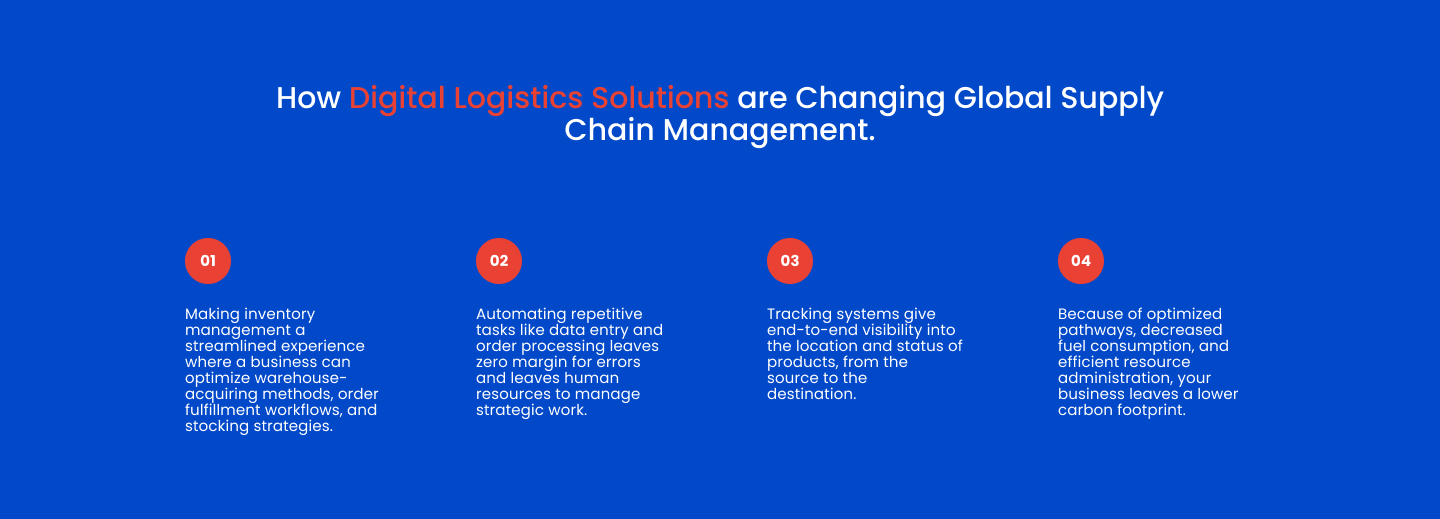
How Digital Logistics Solutions are Changing Global Supply Chain Management.
By using digital solutions, a business can improve the overall efficiency of its global supply chain. They can consistently outperform businesses that depend on traditional logistics.
Digital Logistics in the Supply Chain: What it Means for Your Business.
Your business will be ever ready to take on unique challenges faced, especially in this dynamic socio-political environment, like wars and global warming. The key impact of digital logistics on businesses:
Conclusion:
It is important for your business to integrate digital sourcing platforms into its logistics and warehousing to ensure secure and transparent performances across various stages of the product’s sourcing, logistics, warehousing, and timely delivery. Your businesses will experience powerful growth and will be able to offer personalized services and experiences to individual customers.
At SimpliSource, we believe in the digital transformation of businesses to meet the evolving and dynamic market conditions. We believe in simplifying sourcing and procurement solutions.